
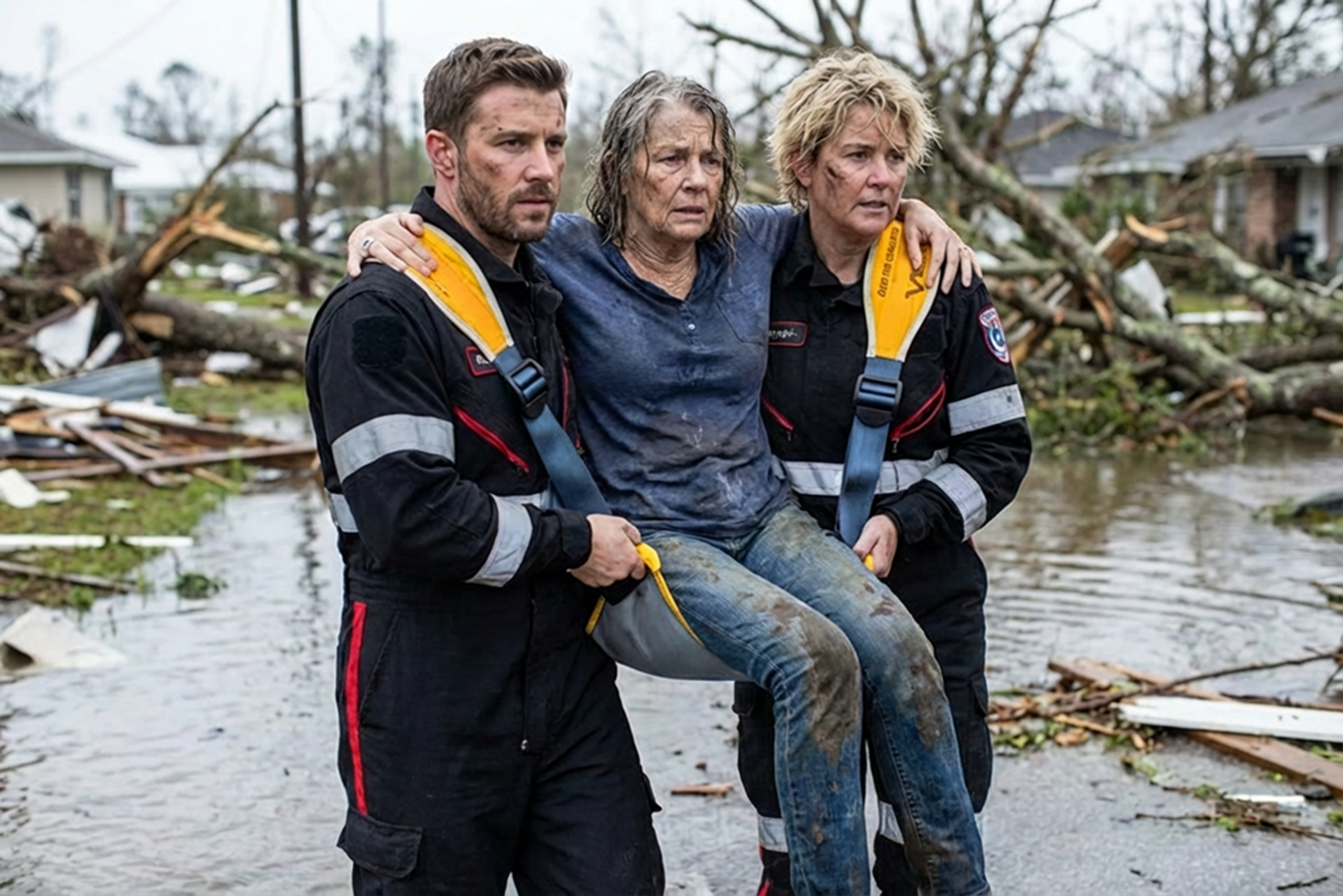
When the Ground Disappears: How Fleetseat Helps EMS Teams Stay Ahead of Rising Floodwaters
September 25, 2026 6:15 amFloods don’t announce themselves politely. The Guadalupe River rose more than 26 feet in under an hour on the Fourth of July 2025, sweeping through Camp Mystic in Kerr County, Texas before most people were awake. By morning, 27 campers and counselors were dead. The final toll across the region exceeded 135. Kerr County had no flood warning sirens (despite the area being well known for flood risk), and cell coverage was too poor for many residents to receive alerts in time.
For EMS teams working flood response, that sequence is familiar. The water moves faster than the plan. The terrain that was passable twenty minutes ago isn’t anymore. And the patients who need moving (elderly residents, people with mobility impairments, those with lower-limb injuries from debris impacts) can’t wait for the right equipment to arrive from somewhere else.
That’s the gap Fleetseat was built for.
What Floods Do to the Ground Under Your Feet
Floods don’t just bring water. They destabilise everything responders rely on. Solid ground becomes mud. Paths become channels. Roads become rivers. In minutes, terrain that was accessible becomes impassable, and the window to evacuate closes fast.
EMS teams in flood-prone regions know this pressure well. The challenge isn’t just patient transport. It’s patient transport before conditions deteriorate further, often with limited personnel on scene and communication systems that may be compromised by power outages and damaged cell infrastructure.
Traditional equipment struggles here. Wheeled gurneys sink in mud or can’t navigate flooded paths. Rigid litters require multiple carriers and won’t fit in the swift-water rigs that often reach patients first. Every minute spent waiting for the right equipment is a minute the water is rising.
What Fleetseat Offers in a Flood Environment
Fleetseat uses a seated carry position, a deliberate design choice. Where a supine carry (patient lying flat, as on a stretcher or backboard) requires a rigid frame, multiple carriers, and terrain that accommodates the stretcher’s length, a seated carry keeps the patient’s centre of gravity low, reduces physical demand on the carriers, and allows two people to navigate environments where a supine carry would be impossible. In a flood environment, that distinction matters enormously.
It weighs under 800 grams, fits in a first aid kit or clips directly to a responder’s gear, meaning it’s always on-person, not back in a vehicle that may no longer be accessible.
It deploys in 15–20 seconds, with instructions printed in high-visibility text directly on the device, readable in low light, with gloved hands, under stress.
Always on-person. In flood response, the vehicle you arrived in may not be where you need it when you need it. Fleetseat goes where the responder goes.
Two carriers only. In resource-scarce environments where personnel are stretched across multiple simultaneous rescues, requiring only two people to move a patient is a genuine operational advantage.
One hand free per carrier. The handle design keeps one hand available: for a rope, a radio, navigating early-stage floodwater, or steadying footing on unstable ground.
Dignified handling. Strategically placed handles allow safe, dignified patient transport without awkward contact, important when patients are wet, distressed, or in pain.
Ergonomic load distribution. Developed with biomechanical experts, the weight distribution system significantly extends carry range for most two-person teams compared to an unassisted carry, reducing fatigue and the frequency of crew rotation when rotation may not be possible.
Where It Fits in Flood Response
Pre-surge evacuations. The most valuable window in flood response is before the water arrives. Fleetseat lets two responders quickly move elderly or mobility-impaired residents from homes to vehicles, without waiting for equipment that may take longer to deploy than the window allows.
Post-flood extractions. Once floodwaters recede, access points are often blocked by debris and mud. Two responders with a Fleetseat can reach patients in locations a wheeled gurney can’t, extracting them to a staging point where standard equipment takes over.
Swift-water support. When swift-water teams extract patients from vehicles or rooftops, the challenge then becomes moving that patient across compromised terrain to an ambulance or helicopter. Fleetseat bridges that gap with two carriers and no rigid frame to snag on debris.
Mass casualty triage. In large-scale flood events, multiple patients need moving simultaneously. Ten Fleetseats move ten patients at once with twenty personnel, a meaningful force multiplier when resources are stretched thin.
How It Fits Your Existing Protocols
Fleetseat doesn’t replace your standard equipment. It fills the gap before that equipment can reach the patient. Three primary use cases in flood response:
- Initial extraction from a flooded or compromised location to a safe staging area
- Secondary transport from staging to ambulance or airlift
- Pre-surge evacuation of mobility-impaired residents before conditions deteriorate
Get the patient to safety. Your standard equipment takes it from there.
The Numbers
| Fleetseat | Collapsible Litter | |
|---|---|---|
| Weight | Under 800g | 7–10 kg |
| Carriers required | 2 | 3–6 |
| Deployment time | 15–20 seconds | 2–5 minutes |
| Fits in a kit bag / on-person | Yes | No |
| Works on uneven/muddy terrain | Yes | Limited |
The Bottom Line
In flood response, the equipment that helps is the equipment that’s already there. A carry device in the rig two blocks away, or back at the station, isn’t useful when the water is rising and the window is closing.
At under 800 grams, Fleetseat clips to your gear and goes where you go. When you reach a patient who can’t walk out, you’re already ready.
See where Fleetseat fits your team. Get in touch at info@thefleetseat.com or thefleetseat.com.
Categorised in: Uncategorised
This post was written by Luke