
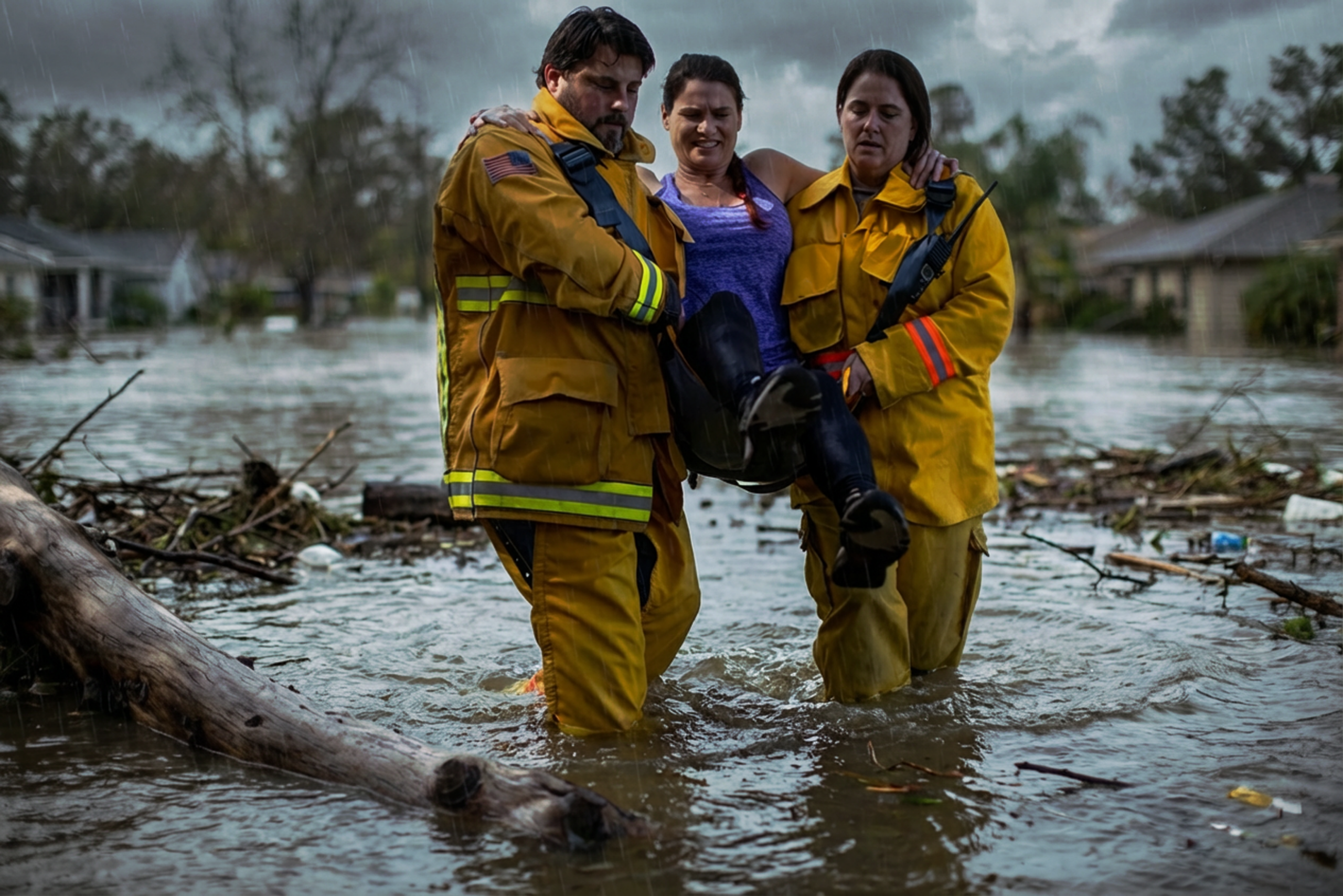
Before the Surge Arrives: How Fleetseat Helps EMS Teams Move Faster in Hurricane Response
September 25, 2026 6:32 amHurricanes give warnings that floods and tornadoes often don’t. But advanced warning doesn’t always translate into successful evacuation, especially for the people who need it most.
When Hurricane Beryl made landfall near Matagorda, Texas in July 2024 as a Category 1 storm, it knocked out power to nearly three million residents across southeast Texas. At least 36 deaths were attributed to the storm, a significant number caused not by wind or water directly, but by the prolonged power outages that followed, as elderly residents and people dependent on medical equipment lost access to air conditioning and life-sustaining devices in temperatures exceeding 100 degrees.
The lesson for EMS teams isn’t just about the storm itself. It’s about the window before and immediately after, when moving vulnerable people quickly and with minimal equipment is the difference between getting them out safely and leaving them exposed to what comes next.
What Hurricanes Do to EMS Operations
Hurricanes create a layered challenge that few other disasters match. Before landfall, EMS teams are racing to evacuate nursing home residents, mobility-impaired individuals, and people who can’t self-evacuate. After landfall, they’re extracting those who stayed behind from flooded homes, debris-strewn streets, and buildings without power.
Throughout both phases, the terrain is hostile. Flooded streets render wheeled equipment useless. Downed trees block access routes. Power outages eliminate elevators and lighting. Communication infrastructure fails: during Beryl, damaged cell towers left some communities without any warning alerts, forcing EMS crews to operate independently with no guarantee of backup.
In that environment, equipment that depends on stable terrain, multiple carriers, or vehicle access becomes a liability rather than an asset.
What Fleetseat Offers in a Hurricane Environment
Fleetseat uses a seated carry position, a deliberate design choice that gives it distinct advantages in hurricane conditions. Where a supine carry requires a rigid frame, multiple carriers, and terrain that accommodates stretcher length, a seated carry keeps the patient’s centre of gravity low, reduces physical demand on carriers, and allows two people to move through environments where a stretcher simply won’t go.
At under 800 grams, it clips to a responder’s gear or fits in a kit bag, always on-person, not stored in a vehicle that may be inaccessible once conditions deteriorate.
Deploys in 15–20 seconds. Instructions are printed in high-visibility text directly on the device, readable in low light, with gloved hands, under stress. No assembly. No tools.
Two carriers only. In pre-landfall evacuations where personnel are stretched across multiple simultaneous callouts, requiring only two people to move a patient is a genuine operational advantage.
One hand free per carrier. The handle design keeps one hand available: for a radio, a door, navigating early floodwater, or steadying footing on unstable ground.
Dignified handling. Strategically placed handles allow safe, dignified patient transport. For elderly patients already distressed by evacuation, this matters.
Ergonomic load distribution. Developed with biomechanical experts, the weight distribution system significantly extends carry range for most two-person teams compared to an unassisted carry, reducing fatigue and the frequency of crew rotation when rotation may not be an option.
Where It Fits in Hurricane Response
Pre-landfall evacuations. The most valuable window in hurricane response is the hours before the storm arrives. Fleetseat lets two responders quickly move elderly or mobility-impaired residents from homes to transport vehicles, without waiting for equipment that takes longer to deploy than the window allows. Nursing home evacuations, in particular, involve repeated carries across corridors and loading zones where a lightweight, two-person device is faster than any wheeled alternative.
Post-storm extractions. Once the storm passes, access points are often blocked by debris, standing water, and downed power lines. Two responders with a Fleetseat can reach patients in locations a wheeled gurney can’t, extracting them to a staging point where standard equipment takes over.
Power outage response. Beryl’s death toll illustrated something EMS teams already know: the storm’s immediate aftermath can be as dangerous as the event itself. Moving medically vulnerable residents from homes without power to cooling centres or medical facilities requires exactly the kind of lightweight, on-person carry capability Fleetseat provides.
Mass casualty events. In large-scale hurricane impacts, multiple patients need moving simultaneously. Ten Fleetseats move ten patients at once with twenty personnel, a meaningful force multiplier when mutual aid is still hours away.
How It Fits Your Existing Protocols
Fleetseat doesn’t replace the backboard or wheeled stretcher. It fills the gap before those resources reach the patient, or in locations they can’t reach at all. Three primary use cases in hurricane response:
- Pre-landfall extraction of mobility-impaired residents before conditions deteriorate
- Post-storm extraction from compromised locations to a safe staging area
- Secondary transport from staging to ambulance or airlift
Get the patient to safety. Your standard equipment takes it from there.
The Numbers
| Fleetseat | Collapsible Litter | |
|---|---|---|
| Weight | Under 800g | 7–10 kg |
| Carriers required | 2 | 3–6 |
| Deployment time | 15–20 seconds | 2–5 minutes |
| Fits in a kit bag / on-person | Yes | No |
| Works on flooded/uneven terrain | Yes | Limited |
The Bottom Line
In hurricane response, the preparation window is real but narrow. The equipment that helps is the equipment that’s already there: on the responder’s gear, ready to deploy in seconds, requiring no more than two people to operate.
At under 800 grams, Fleetseat is built for exactly that. When you reach a patient who can’t walk out before the surge arrives, you’re already ready.
See where Fleetseat fits your team. Get in touch at info@thefleetseat.com or thefleetseat.com.
Categorised in: Uncategorised
This post was written by Luke