
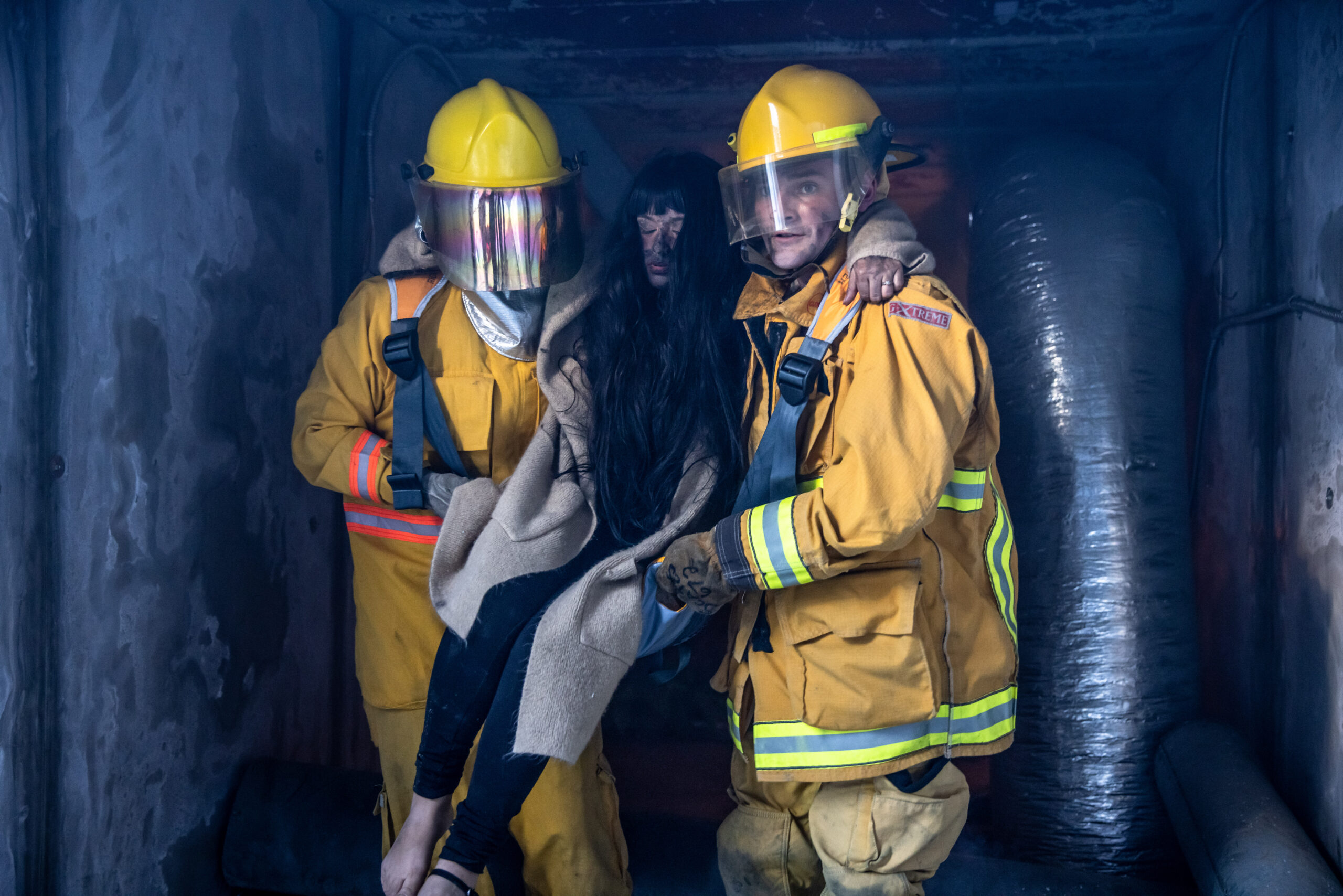
Wildfire Evacuation: How Fleetseat Supports EMS Teams
September 25, 2026 3:59 amWhen the Eaton Fire tore through Altadena and Pasadena in January 2025, more than 70 long-term care facilities across LA County were evacuated. Over 1,400 nursing home and assisted living residents were moved in the Pasadena area alone, among them ventilator-dependent patients, dementia residents, and people who couldn’t bear weight, all evacuated in the middle of the night as flames closed within metres of their buildings.
An investigation later found that more than 90% of those facilities’ evacuation plans were outdated. One resident was left behind and had to be rescued by the Pasadena Fire Department.
For EMS professionals, that sequence tells a familiar story: the plan looked adequate until it met a fire moving faster than anyone expected, and then the gap between what was written and what was possible became life-threatening.
What Wildfires Do to EMS Operations
Wildfires move differently from other disasters. They can travel at up to 14 mph in grass, faster with wind, and they generate radiant heat that makes proximity dangerous long before flames arrive. Smoke reduces visibility and respiratory capacity simultaneously. Terrain that was accessible minutes ago can be cut off by a spot fire or a wind shift.
For EMS teams, the challenge is not just patient transport. It’s repeated patient transport, under time pressure, in conditions that are physically exhausting and rapidly deteriorating. A nursing home evacuation isn’t one carry. It’s dozens, in succession, with the same personnel, in the same heat.
It’s a challenge the US knows well, and one that Australia has faced at scale. The 2019–2020 Black Summer burned 46 million acres and triggered the largest peacetime evacuation in the nation’s history. The two countries now routinely share strike teams, aircraft, and operational doctrine, because the problem is identical on both sides of the Pacific.
The Nursing Home Problem
Care facilities are where wildfire evacuation becomes most complex. The Eaton Fire illustrated every dimension of this:
Elevators fail when power goes. Hallways narrow with wheelchairs and gurneys moving in opposing directions. Ambulances queue outside while staff race against a fire that doesn’t queue. Patients who could walk slowly under normal conditions can’t walk at all under panic and smoke.
Wheelchairs help, but there are never enough for every patient who needs one, and they don’t load quickly into vehicles. Standard evacuation sleds and stair chairs require three or more staff to operate safely, pulling personnel away from other simultaneous carries. Every carry that takes longer than it needs to is a carry that leaves someone else waiting longer.
This is where the math of patient-to-staff ratios becomes critical. A two-person team that can complete a carry faster, and with less fatigue, can move more patients in the same window. That’s not a marginal improvement in a wildfire. It can be the difference between getting everyone out and not.
What Fleetseat Offers in a Wildfire Environment
Fleetseat uses a seated carry position, a deliberate design choice. Where a supine carry requires a rigid frame, multiple carriers, and terrain that accommodates stretcher length, a seated carry keeps the patient’s centre of gravity low, reduces physical demand on carriers, and allows two people to move through environments a stretcher can’t navigate.
At under 800 grams, it clips to a responder’s gear or fits in a kit bag, always on-person, not stored in a vehicle that may be cut off by a wind shift.
Deploys in 15–20 seconds. Instructions are printed in high-visibility text directly on the device, readable in low light, with gloved hands, under stress. No assembly. No tools.
Two carriers only. In nursing home evacuations where staff are stretched across multiple simultaneous carries, requiring only two people per patient is a meaningful operational advantage.
One hand free per carrier. The handle design keeps one hand available: for a door, a radio, or steadying footing on uneven ground outside a care facility.
Dignified handling. Strategically placed handles support safe, dignified patient transport without awkward contact, important for dementia patients and elderly residents who may become distressed by unfamiliar handling.
Ergonomic load distribution. Developed with biomechanical experts, the weight distribution system significantly extends carry range for most two-person teams compared to an unassisted carry, reducing fatigue across repeated carries when the same team must move multiple patients in succession.
Where It Fits in Wildfire Response
Nursing home and care facility evacuations. The highest-stakes application. Two staff can move a non-ambulatory resident from room to transport vehicle repeatedly, with less fatigue per carry than an unassisted method, meaning the same team can move more patients before the window closes.
Rapid field extractions. When a patient sustains a lower-limb injury at or near a fire perimeter (a fall while evacuating, a vehicle accident on a blocked road), Fleetseat lets two responders move them to a safe staging point without waiting for a litter team.
Remote and rough terrain. Wildfires frequently burn in areas where wheeled equipment is useless. Fleetseat’s seated carry position and absence of a rigid frame allows navigation over rocky, uneven ground that would stop a gurney entirely.
Volunteer and spontaneous responder environments. In large wildfire events, trained volunteers and off-duty personnel often arrive before official mutual aid. A Fleetseat and brief instruction turns a trained individual into an immediate patient-movement resource under EMS command.
How It Fits Your Existing Protocols
Fleetseat doesn’t replace the gurney, backboard, or evacuation sled. It fills the gap when those resources are unavailable, inaccessible, or insufficient in number. Primary use cases in wildfire response:
- Repeated short carries in nursing home and care facility evacuations: room to vehicle, repeatedly
- Field extractions from fire perimeter or rough terrain to a safe staging area
- Secondary transport from staging to ambulance or airlift when primary equipment is committed elsewhere
The Numbers
| Fleetseat | Collapsible Litter | |
|---|---|---|
| Weight | Under 800g | 7–10 kg |
| Carriers required | 2 | 3–6 |
| Deployment time | 15–20 seconds | 2–5 minutes |
| Fits in a kit bag / on-person | Yes | No |
| Works on rough/uneven terrain | Yes | Limited |
The Bottom Line
Wildfire season is no longer a season. It’s a year-round operational reality on both sides of the Pacific. When a facility evacuation involves dozens of patients, limited staff, and a fire that doesn’t wait, the equipment that helps is the equipment that’s already there: on the responder’s gear, ready in seconds, requiring only two people to operate.
At under 800 grams, Fleetseat was built for exactly that.
See where Fleetseat fits your team. Get in touch at info@thefleetseat.com or thefleetseat.com.
Tags: wildfire-evacuation-ems-teamsCategorised in: Disaster Response
This post was written by Luke